
Latha (name changed) earns $60,000 a year in Austin, saves half of it, and calculates her FIRE number the way most engineers approach a hard problem: with a spreadsheet, not a feeling. At her current savings rate, she’ll cross her number in a little over 14 years. Her colleague earning more, saving less, needs nearly double that.
FIRE, Financial Independence, Retire Early, has moved from a niche forum obsession into a real strategy plenty of NRIs are quietly building their finances around. It works. It also has real trade-offs that rarely make it into the inspirational version of the story.

Must Read – Mr. NRI – Time Is Money When it Comes to Retirement Planning!
Where FIRE Actually Comes From
Vicki Robin and Joe Dominguez’s 1992 book “Your Money or Your Life” first laid out the core idea, and it’s since grown into an entire movement with its own forums, calculators, and vocabulary. The mechanics are simple: live well below your means, save aggressively, and invest the surplus long enough to reach a corpus that can fund your expenses indefinitely.
The Honest Trade-Off
What You Gain
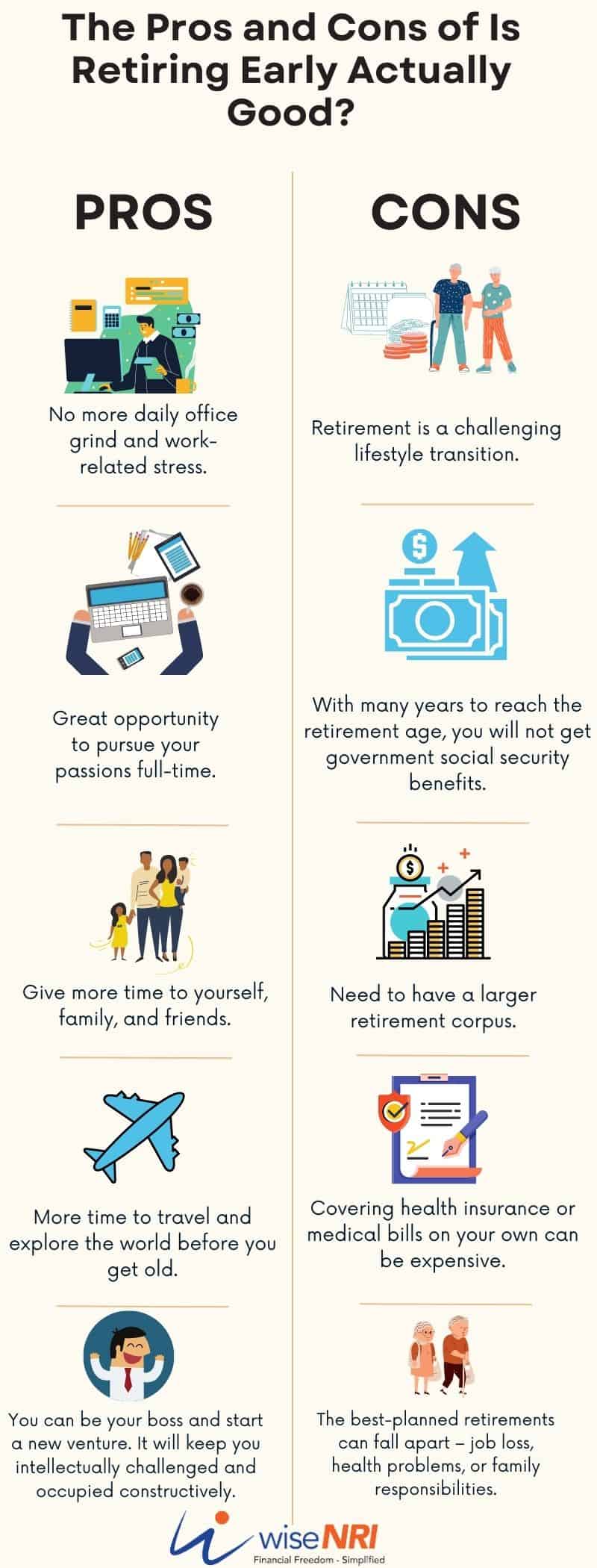
No daily grind. Real time for passions, family, travel, and the option to build something new purely because you want to, not because rent is due.
What You Give Up
Decades without government social security, a genuinely larger required corpus, self-funded health coverage, and real exposure if job loss, illness, or family needs disrupt the plan early.
Must Check – Mr. NRI – How Much Retirement Corpus Is Enough
Why India Genuinely Changes the Math
Retiring in a country with a higher cost of living than India demands a genuinely bigger nest egg to hit the same FIRE number. Retiring in India instead brings real advantages: proximity to family, healthcare that’s improved substantially, and the simple arithmetic of earning in a stronger currency while spending in a weaker one, which stretches a dollar-denominated corpus considerably further.
The Core Formula NRIs Actually Use
- High savings rate: genuinely higher than typical, some practitioners save up to 70% of income.
- Target corpus: roughly 25 times annual expenses, smaller if your lifestyle is genuinely minimalist, larger if it isn’t.
- Withdrawal rate: around 4% of the initial corpus annually, with the remainder left to keep growing.
Three Worked Examples
Minakshi earns $70,000, saves 20% at an 8% annual return. Her 25x target lands around $1.4 million. Timeline: roughly 28.5 years.
Latha earns $60,000, saves 50% at the same 8% return, with a leaner target of $750,000 given lower expenses. Timeline: just over 14 years.
Mohnish and Vasudha, a couple earning $100,000 combined, save 30% with plans to retire in India. Same assumptions get them there in about 23 years, and their corpus converts to a genuinely substantial sum in rupees given typical exchange rates, enough for a comfortable Indian lifestyle even though the dollar target looked modest.
Must Check – Best Places To Retire
Which Version of FIRE Fits You
Fat FIRE
Keep your current lifestyle intact. Needs higher earnings and a genuinely aggressive savings and investment strategy.
Lean FIRE
Already minimalist, and happy to stay that way. Reaches the 25x target fastest of the three.
Barista FIRE
Financially independent, but keeps working part-time or on gigs to supplement a corpus that isn’t quite full-FIRE size.
Must Check – Why Should NRIs Save For Early Retirement
⚠ Where FIRE Plans Actually Break
Outstanding student or home loan debt can quietly push the timeline back 5 to 8 years, since early savings get absorbed into repayment instead of the corpus. Outliving the corpus remains a genuine risk if expenses run higher than modelled or returns disappoint for a stretch. And FIRE asks real sacrifices of a lifestyle a spouse or children may not have signed up for the same way you have, worth an honest family conversation before committing, not after.
Is FIRE actually for you?
It suits high earners with a genuinely high savings capacity and comfort with a minimalist lifestyle, people who value experiencing life now over earning indefinitely, and NRIs earning in a strong currency with a genuine plan to retire in India, where the math simply works better. Even if full retirement isn’t the endpoint, the underlying discipline, becoming financially independent as fast as possible, is worth building regardless of whether you ever actually stop working.
Building your own FIRE number?
We help NRIs model a realistic target corpus, savings rate, and India-vs-abroad currency math specific to their situation.
Retiring at 30 is unrealistic for most. Planning like you might is a discipline worth having regardless.
💬 Your Turn
Have you tried FIRE or a version of early retirement planning? Share what’s working, or what’s derailed the plan so far.


Save AT LEAST the same percentage of your income as your AGE. If you are 25 you should be saving AT LEAST 25% of your income. The remaining 75% is enough to manage Income Tax, rent (or mortgage) & other living expenses. Having a 2 income family makes it possible to save more well over 25% of combined income.
Continuing the example, at age 26 you should save at least 26%…at age 40 you should be saving at least 40%.
The increased savings is made possible thanks to annual increases in income from increments, promotions etc.
Most important is then to invest the savings in SAFE mutual funds so that the savings compounds at a rate well over inflation. Fixed Deposits will not offer high compounding.