
Deepa had her son’s wedding fully planned, venue booked, guest list finalized, flights arranged, when her husband’s company announced sudden layoffs three months out. They pulled it off anyway, scaled down and rescheduled, but only because they’d kept six months of expenses in reserve without ever expecting to actually need it. (name changed)
Life rarely goes exactly to plan. Vacations get cancelled, jobs disappear, health emergencies arrive without warning. We at wiseNRI think it’s genuinely essential for NRIs to have a Plan B for their finances, because so many aspects of life simply don’t unfold the way we expect, and being financially ready to adapt matters more than having the perfect original plan.

Must Read: Financial Planning For NRI, How It’s Different and Complex
⚡ Quick Answer
Every NRI needs a genuine emergency fund, typically 3-6 months of living expenses, held somewhere liquid and easily accessible, as protection against job loss, disaster events, illness or accident, and sudden shifts in income or wealth. It’s the single most practical financial buffer against the things you can’t predict but should still plan for.
Why NRIs Need an Emergency Fund
An emergency fund is a genuine financial safety net, a designated pool of savings set aside specifically to cover unforeseen expenses: medical emergencies, urgent repairs, or a sudden loss of income. Its whole purpose is to keep you from resorting to high-interest debt or draining long-term savings when something unexpected hits.
Having enough saved matters for both financial stability and genuine peace of mind. We recommend three to six months’ worth of living expenses in the fund, adjusted for your own circumstances, job stability, family size, and existing insurance coverage.
With that buffer in place, you can respond to a real setback without derailing your broader financial plan. It absorbs the shock, so you can actually focus on resolving the situation instead of scrambling for cash at the same time.
Building it takes consistent discipline. Start small if you have to, and grow it steadily. Keep it genuinely liquid, a savings account or money market fund, not locked into something you can’t access quickly when you need it.
Why NRIs Specifically Need a Plan B
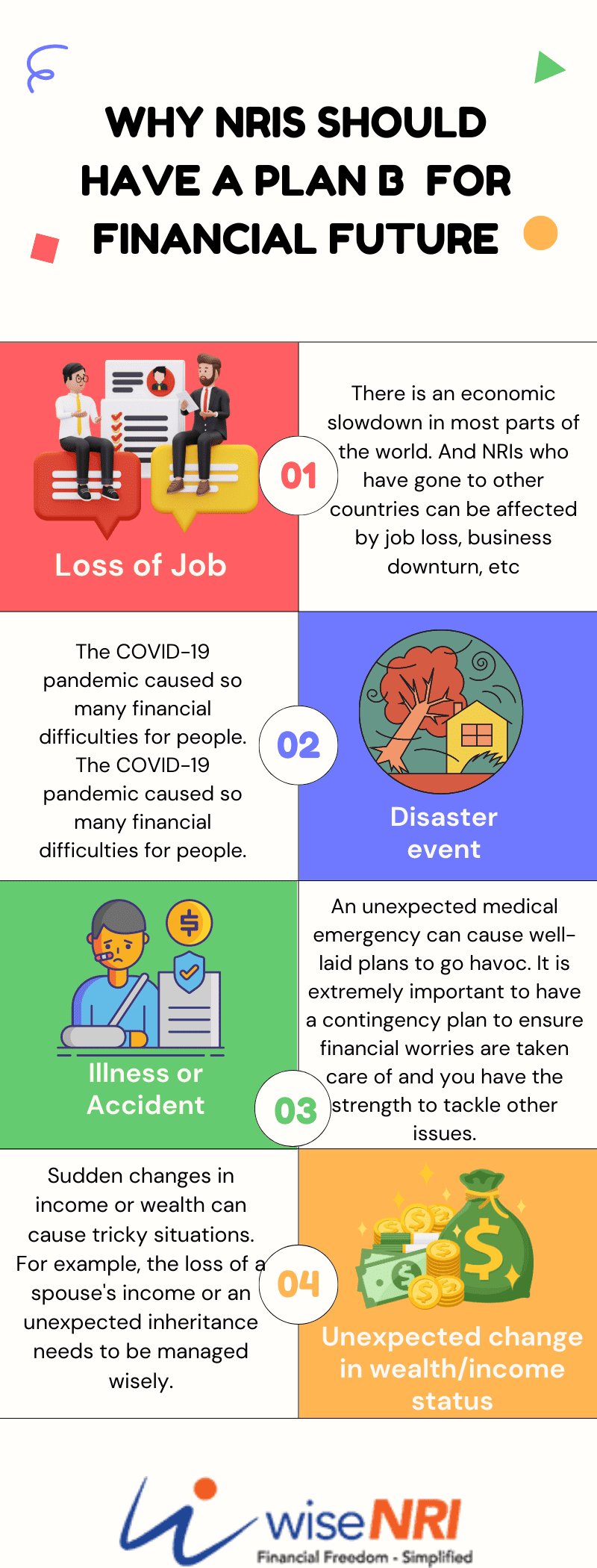
Loss of Job
Economic slowdowns hit different parts of the world at different times, and NRIs are exposed to job loss or business downturns just like anyone else, sometimes with an added complication: your residency status may be tied directly to your employment or business.
It’s genuinely hard to plan calmly in the middle of a crisis, which is exactly why the plan needs to exist beforehand. Build a real professional network before you need it. Keep learning new skills so you stay employable and adaptable. If you have a hobby or side skill with real earning potential, developing it now gives you another option later.
Must Check: 9 Benefits of Early Financial Planning for NRIs
Disaster Events
Genuine disruptions, wars, pandemics, natural disasters, have uprooted lives with little warning. Indians working in Ukraine had to evacuate abruptly when the conflict began. The COVID-19 pandemic caused real financial hardship for millions, with plans for jobs, moves, and education abroad all derailed overnight for people who had no real backup plan in place.
With this much genuine uncertainty in the world, an accessible emergency fund isn’t optional. The standard 3-6 months of expenses gives you real room to adapt without panic when the next disruption arrives, whatever form it takes.
Illness or Accident
An unexpected medical emergency can upend even the most carefully laid plans. A real contingency plan matters here specifically: health insurance valid in both your country of residence and India, adequate accident cover in both places, and nominees who actually know how to file a claim when the time comes, not just who’s listed on paper.
Check: Health Insurance for NRI in India

Must Check: Five Financial Tips for NRI Small Business Owners
Unexpected Change in Wealth or Income
Sudden shifts in income or wealth create their own genuine challenges, the loss of a spouse’s income, or an unexpected inheritance that needs managing wisely rather than reactively.
Job or residency status changes abroad can bring unexpected new expenses. Liquid investments help you absorb that kind of shift without disruption.
If you’ve come into unexpected wealth in India, your financial plan needs to actually accommodate it, or the temptation to spend it carelessly, or simply let it sit idle and lose value, becomes real. A financial advisor with genuine experience handling NRI investments can help that windfall actually grow into something meaningful instead of quietly evaporating.
Change is the one genuine constant in life. We can’t predict every unexpected situation, but a real strategy for handling the unpredictable, built into your financial plan in advance, protects your overall financial wellbeing far more than good intentions ever will.
Frequently Asked Questions
Where should I actually keep my emergency fund?
Somewhere genuinely liquid and easily accessible: a savings account, a liquid mutual fund, or a money market fund. Avoid anything with lock-in periods or exit penalties, since the whole point is fast access when you need it.
Should my emergency fund be in India or in my country of residence?
Ideally split across both, since emergencies can arise on either side. Keep enough in your country of residence for immediate local needs, and a separate reserve in India accessible to family there if needed.
How do I build an emergency fund if I’m currently living paycheck to paycheck?
Start small and automate it. Even a modest fixed transfer each month, treated as non-negotiable, compounds into a real buffer over a year or two, which matters far more than waiting for a large lump sum you may never have spare.
Nobody plans for the wedding to need a Plan B. That’s exactly why the Plan B has to exist before the wedding does.
Not sure if your emergency fund is genuinely enough?
Let’s work out the right number for your specific situation.
💬 Your Turn
Has your own Plan B ever come to the rescue? Share your story in the comments.


How should i send my funds to India as an NRI so i dont need to pay taxes ??
How can I gift an amt.Rs.60lk to my son at Chicago?