
Let’s be honest: money matters for a good life. But earning it is only half the job. It has to be used well, so it doesn’t quietly waste away, and directed into the right investments so it can grow and actually help you reach your goals.
Quick Answer
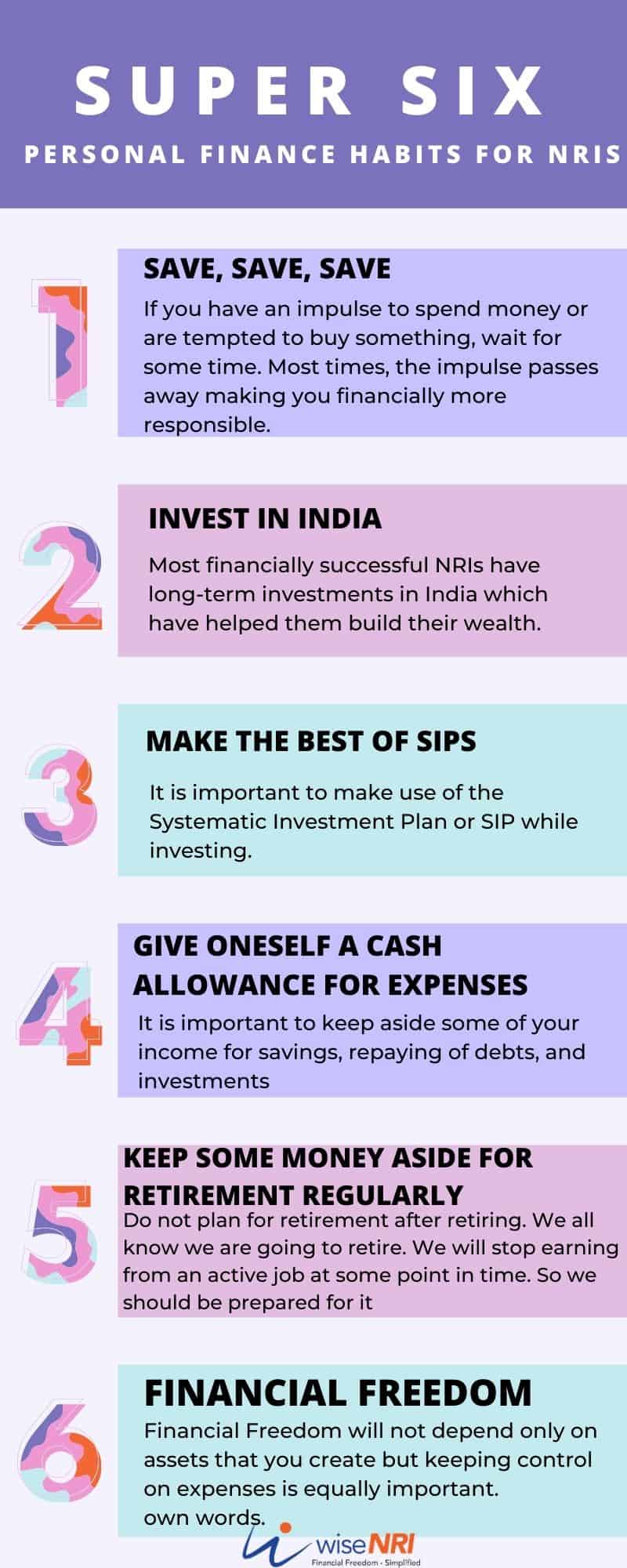
Successful NRIs tend to share six habits: disciplined saving, long-term investing in India, using SIPs to avoid market timing, budgeting expenses through a fixed cash allowance, consistently setting aside money for retirement, and treating financial freedom as the ultimate goal rather than income alone. None of these require a high income specifically, just consistency over time.

Read: Best Magazine for Finance in India
Personal Finance Habits for NRIs
Save, Save, Save
Non-Resident Indians send more money back to their home country than non-residents of any other nationality worldwide, with inflows reaching over USD 135 billion annually in recent years. NRIs are, genuinely, big savers, and India’s cultural habit of frugal living stays well entrenched even after years abroad.
Naresh spent ten years in Dubai in the early 2000s. Despite plenty of tempting gadgets and lifestyle products around him, he resisted, and instead sent money home and invested steadily in India. If you feel the impulse to spend, waiting even briefly often lets that impulse pass, leaving you more financially responsible for it.
Invest in India
The Indian market remains a genuinely strong long-term investment vehicle: a developing economy with real growth potential, backed by a well-developed stock market, mutual fund industry, and debt instrument market. Most financially successful NRIs hold long-term investments in India that have meaningfully contributed to their overall wealth.
Make the Best of SIPs
Using a Systematic Investment Plan, or SIP, is worth building into your investing habit. Mutual funds let you invest a small amount regularly over time, and this same approach works with other products too. It averages out market fluctuations, keeps each individual investment affordable, and removes the pressure of trying to “time” the market entirely.
Must Check: Personal Finance in the USA, Shared by an NRI
Give Yourself a Cash Allowance for Expenses
Shireen works in Singapore, where the cost of living is high but the shopping and dining options are genuinely tempting and easily accessible. She spent freely for her first three to four months there. Once she noticed her savings dwindling, she divided her salary into distinct buckets, savings, expenditure, emergency, and so on, and limited her spending strictly to the expenditure bucket.
Setting aside a portion of income for savings, debt repayment, and investments before touching the rest for spending is one of the simplest ways to genuinely cap unnecessary expenses.
Set Money Aside for Retirement Regularly
Don’t plan for retirement after you’ve already retired. It’s coming for all of us at some point, and NRIs, often earning in stronger currencies like USD or GBP, are genuinely well positioned to build a substantial retirement corpus if they start early.
NRIs can invest both in their country of residence and in India, provided they follow the applicable laws and tax rules on each side. In India, that typically means mutual funds, stocks, and NRI FD accounts. While working abroad, it’s worth:
- ✓Planning your short and long-term goals explicitly.
- ✓Investing in suitable products after genuine research and analysis. If you’re not comfortable making these calls solo, a financial planner or wealth management firm with real expertise in NRI financial planning can handle investments, taxation, and portfolio management for you.
Check: Planning for Retirement in India
Financial Freedom
We’ve saved the best for last. Successful NRIs genuinely understand the value of making hay while the sun shines, prioritising financial freedom and aggressively accumulating toward it rather than drifting along on income alone.
In simple terms, financial freedom means having enough assets that your expenses are fully covered without needing active income. It depends just as much on controlling expenses as it does on building assets, since the gap between the two is what actually determines when you get there.

A Few More Tips for Good Personal Finance Habits
- ✓Track your expenses and adjust course if they start creeping beyond your means.
- ✓Don’t fall for heavily marketed products. Invest in whatever genuinely aligns with your financial needs and plan.
- ✓Review your investment portfolio on a regular basis, not just when something goes wrong.
Want help building these habits into an actual plan?
We work with NRI clients to turn these principles into a concrete, personalised financial plan.
Follow these habits consistently, and a rewarding, financially successful life tends to follow.


When i have to buy a home in chennai being an nri