
⚡ Quick Answer
NRI students studying abroad commonly face cultural adjustment, isolation, discrimination, visa complexity, financial pressure, and homesickness. Most of these challenges ease with time and the right support system – but a few, like scams and illegal work, can have serious legal consequences and need to be actively avoided, not just endured.
The trend of Non-Resident Indian students going to foreign universities for higher education keeps growing every year.
The challenges faced by Indian students aspiring to study abroad are numerous – convincing parents, selecting the right country and college, preparing for exams, and managing finances. But the journey doesn’t end there. Adjusting to a new country, unfamiliar norms, and a different culture takes real work. It needs a flexible mindset and a fresh perspective to not just survive, but actually thrive.
Must Read – Child’s Higher Education – Things NRIs Should Consider
NRI students face unique challenges pursuing education abroad. If you work at embracing a new environment, studying abroad can be a genuinely great experience.
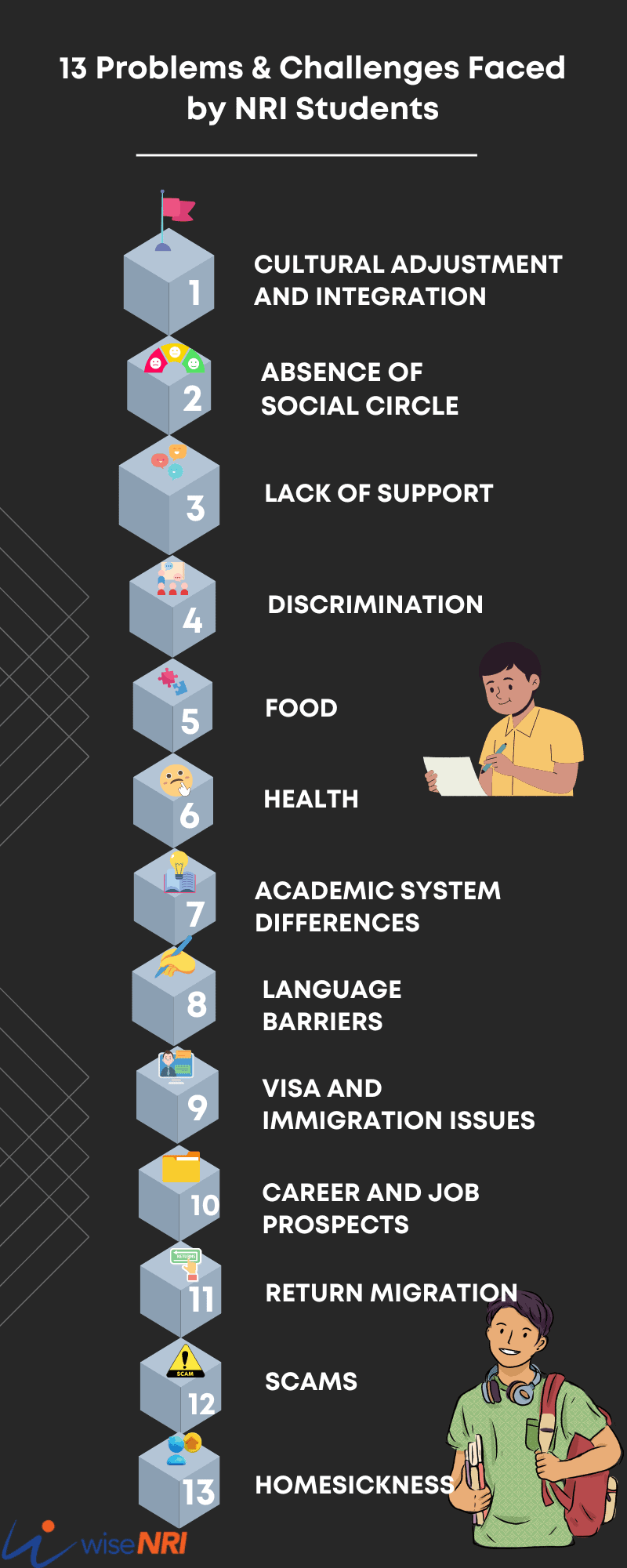
Here are 13 unique challenges NRI students commonly face, along with practical ways to handle each one.
1. Cultural Adjustment and Integration
NRI students often struggle to adjust to a new culture, language, and social norms. The change can be overwhelming, leading to homesickness, isolation, and a sense of being an outsider.
Prepare to adjust deliberately – seek out local customs and norms rather than waiting to absorb them passively. Making friends with other NRI and local students helps you adjust faster.
2. Absence of Social Circle
NRI students often struggle to form connections with local students, while also balancing Indian traditions against the local culture of their country of residence. Add language barriers and the stress of studies, and it’s a heavy mix for anyone to handle – let alone a student living away from home for the first time.
This isolation can affect your overall experience. You may miss family and friends most during festivals, birthdays, and vacations.
As a young adult, you have more capacity to assimilate and build meaningful relationships than you might expect. But if you’re struggling, reach out to your school’s international student office, professors, or other NRI students.
3. Lack of Support
The absence of family and social support during emergencies is real. Beyond health issues, students feel vulnerable during exams, when facing discrimination, or simply feeling left out.
The support system you’re used to isn’t there, and that can be genuinely unnerving.
Talk regularly to family and friends back home about the issues you’re facing. Make deliberate effort to meet new people and get involved in local events and activities.
Must Check – What Should I Know About Studying Abroad?
4. Discrimination
Despite progress and awareness, bias and bigotry still exist. NRI students may experience discrimination from other students or locals.
You may not immediately recognize subtle bias when it happens. In a more polarized world, active discrimination or worse can also occur.
Reach out to your support circle and the relevant authorities to report incidents and seek help.
5. Food
Every culture has its own culinary preferences. For someone open to experimenting, that’s part of the fun. For someone on a strict diet – for cultural, religious, or health reasons – it can be genuinely difficult to find appropriate food.
Learning a few simple recipes using locally available ingredients helps you eat well and keep costs down.
6. Health
NRI students may face higher healthcare costs and unfamiliar systems compared to what they knew in India or their home country.
Adequate insurance coverage and a thorough medical checkup before you leave – so you know your allergies and existing conditions – go a long way. A balanced diet, enough sleep, regular exercise, and knowledge of basic first aid and simple home remedies will help too.
7. Academic System Differences
The education system abroad can differ significantly from what you’re used to – teaching methods, evaluation criteria, academic expectations. Adapting takes real effort, especially in your first term.
Check – Stigma of being an NRI
8. Language Barriers
Language proficiency matters for academic success. If you’re not fluent in the language of instruction, understanding lectures, participating in discussions, and completing assignments all get harder – and it can slow down social integration too.
Get exposure to the host country’s language and its nuances before and during your studies. Online tutorials, apps, language classes, or exchange programs all help.
9. Visa and Immigration Issues
NRI students often have to navigate visa and immigration processes largely on their own – paperwork, deadlines, maintaining legal status, staying compliant. This creates real stress and uncertainty if you’re not organised about it.
Build checklists and set reminders with buffer time for each requirement. Get professional help for anything you don’t fully understand – your school’s international students’ office is a good starting point.
Check – NRI Passport Renewal Online
10. Career and Job Prospects
Currency exchange pressure can make it hard for students to make ends meet, tempting some toward illegal part-time work. Avoid this – working without proper permissions and a valid work visa risks serious legal trouble, including deportation.
The struggle doesn’t necessarily end at graduation either. NRI students often face real hurdles finding employment abroad – cultural differences, visa restrictions, competition, and sometimes bias.
Must Read – 5 Financial Lessons from Superheroes
11. Return Migration
Many NRI students eventually return to India. That transition brings its own difficulties – readjusting to local culture, finding suitable employment, rebuilding a social network.
Reverse culture shock is common, and clearing professional exams required in some fields, or adjusting to different pay scales and living costs, can be a real adjustment too.
12. Scams
Admission and employment scams are common, since so many NRI families are chasing a strong future for the next generation. Gullible parents and students can end up enrolled in a mediocre or unaccredited program. Forged papers can lead to serious legal trouble, including deportation.
Check accreditation before applying anywhere, talk to alumni, and do independent research. Make sure the program and institution are genuinely a good fit before committing. Get professional guidance if anything feels off.
Read – School admission for returning NRI families
13. Homesickness
Homesickness is common among students studying abroad – sadness, loneliness, anxiety, sometimes low mood, while away from familiar surroundings. It’s a normal reaction and often fades within a few weeks or months. Sometimes it lingers longer and starts affecting daily functioning and studies.
It shows up physically (low energy, disrupted sleep or appetite), psychologically (low mood, stress, poor concentration), and physiologically (body aches, headaches, upset stomach).
Give yourself time to adjust, and make active effort to build connections in your new environment. Stay in touch with home while building new relationships at school and in your community. Set aside time for things you enjoy – reading, journaling, walking. Never hesitate to ask for help from friends, family, or professors, and seek professional support if homesickness becomes severe or persistent.
Frequently Asked Questions
What’s the most common challenge NRI students face abroad?
Cultural adjustment and isolation tend to hit hardest early on. Most students find it eases significantly within the first semester once they build a social circle.
Is it legal for NRI students to take up part-time work abroad?
Only with proper permissions and the correct visa category – working without authorization risks serious consequences, including deportation. Check your specific visa’s work rules before taking any job.
How can NRI students protect themselves from admission scams?
Verify accreditation independently, talk to current students or alumni, and be wary of programs or agents promising guaranteed admission or unusually easy visa approval.
Happy Learning
While these challenges are real, many NRI students successfully work through them and have genuinely fulfilling experiences abroad. Universities and support services usually offer resources to help you navigate this – use them.
The hardest part is usually the first semester. It gets easier once you stop waiting to feel at home and start building it.
Planning your child’s education fund and financial safety net?
Let’s make sure the finances behind the journey are as solid as the ambition.
💬 Your Turn
Which of these challenges hit you hardest as an NRI student? Share your experience in the comments.


Can you help me find a better interest rate on a pre-existing student loan?